


 Send Inquiry
Hospital Gown
Price 100.0 INR/ Piece
MOQ : 1000 Pieces
Hospital Gown Specification
- Shelf Life
- 3 Years
- Disposable Type
- Gown
- Style
- Non Woven
- Cuff
- No
- Disposable
- Yes
- Recyclable
- Yes
- Sterilized
- No
- Waterproof
- No
- Shape
- Rectangle
- Color
- Blue
- Grade
- Hospital
Hospital Gown Trade Information
- Minimum Order Quantity
- 1000 Pieces
- Supply Ability
- 500 Pieces Per Week
- Delivery Time
- 3 Days
Hospital Gown About
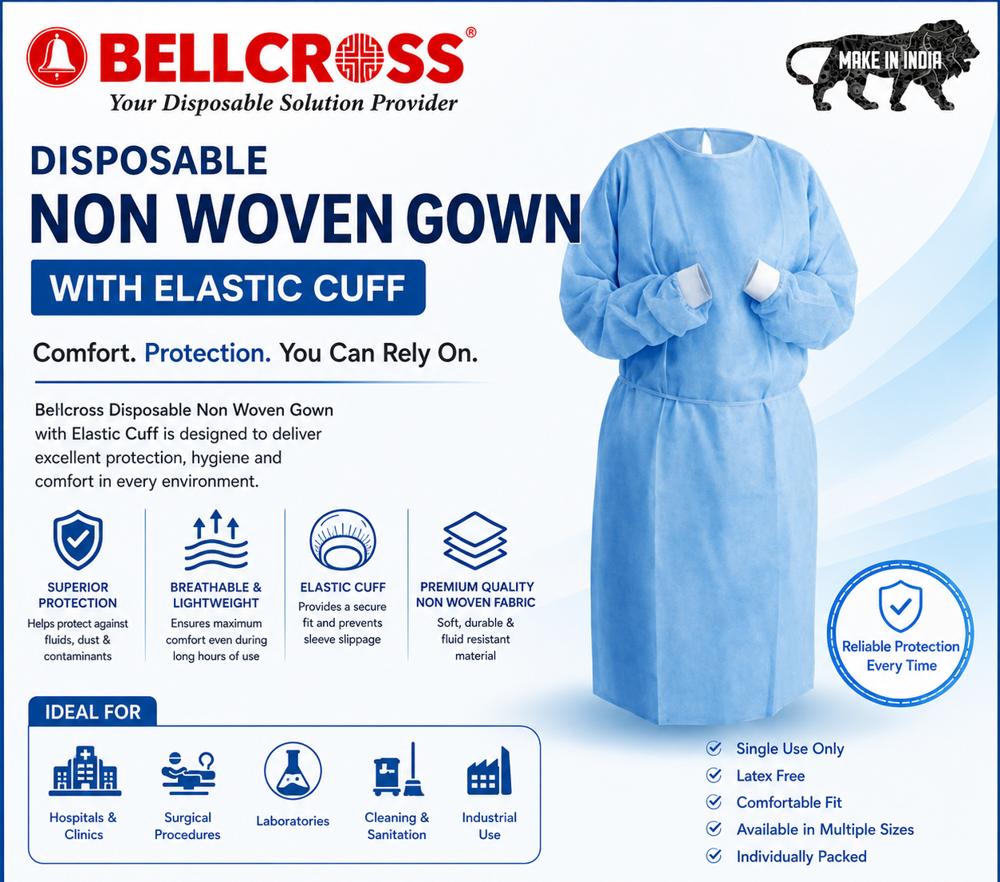
Hospital Gown
Item Code: Bci-012
Backed By Our Rich Industry Expertise, We Bring Forth Non Woven Gown For Our Customers. The Offered Gowns Are Manufactured In Compliance With The Prevailing Industry Standards,
Easy To Wear
Disposable
Comfortable
Non Woven Fabric
Sustainable and Reliable Hospital Wear
This hospital gown offers both environmental consideration and practical design. As a recyclable and reusable garment, it helps facilities reduce waste while meeting stringent hospital-grade requirements. Its blue color supports easy recognition, while its rectangular shape ensures adequate coverage for patient comfort during various medical procedures.
FAQs of Hospital Gown:
Q: How should the hospital gown be used in a medical setting?
A: The hospital gown is intended for use by patients in medical facilities. It provides coverage and comfort during examinations, procedures, or hospital stays, ensuring both dignity and hygiene.Q: What are the benefits of choosing a recyclable hospital gown?
A: Opting for a recyclable gown helps minimize medical waste and supports eco-conscious healthcare practices, ultimately benefiting both the environment and your facilitys sustainability goals.Q: When is it necessary to replace the gown?
A: The gown should be replaced after visible wear, damage, or after a patient is discharged and the gown is laundered according to hospital protocols, ensuring continued hygiene and safety.Q: Where is this hospital gown manufactured and supplied?
A: This gown is manufactured and supplied in India, ensuring local availability and reliable supply chains for healthcare institutions.Q: What is the process for recycling this hospital gown?
A: After its useful lifespan, the gown can be sent to textile recycling facilities equipped to handle medical garments, thus diverting it from landfills and supporting resource recovery.Q: Can the gown be used in procedures involving fluids, given it is not waterproof?
A: Since the gown is not waterproof, it is best suited for general patient wear and non-fluid-intense procedures. For activities involving high fluid exposure, a waterproof alternative should be selected.Q: What makes this product suitable for hospitals and not disposable?
A: This gown is hospital-grade, made from durable materials that allow for repeated use after proper laundering, reducing the need for single-use disposables and lowering long-term operational costs.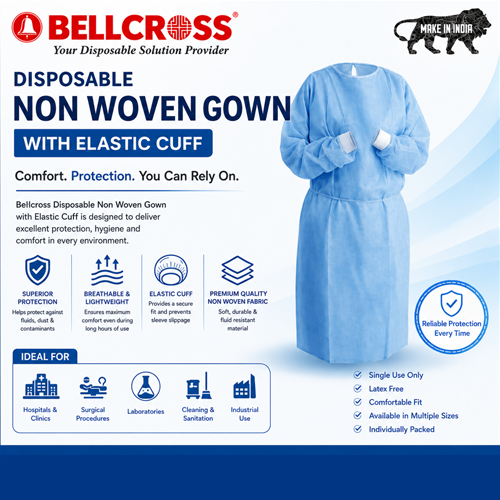
Tell us about your requirement

Price:
Quantity
Select Unit
- 50
- 100
- 200
- 250
- 500
- 1000+
Additional detail
Mobile number
Email

More Products in Surgical Gowns Category
Doctors Gown
Price 65.0 INR / Piece
Minimum Order Quantity : 1000 Pieces
Color : Blue
Material : Other, Nonwoven fabric, spunbond polypropylene
Shelf Life : Up to 3 years (when stored properly)

Doctor Dress - Lab Coat
Price 60.0 INR
Minimum Order Quantity : 1000
Color : White
Material : Other
Shelf Life : 3 Years

Hospital Visitors Coat
Price 75.0 INR / Piece
Minimum Order Quantity : 1000 Pieces
Color : White
Material : Non Woven
Shelf Life : 3 Years
Power Source : Manual

Disposable Non Woven Full Body Suit
Price 200.0 INR / Piece
Minimum Order Quantity : 500 Pieces
Color : Blue
Material : Plastic
Power Source : Manual


BELLCROSS INDUSTRIES PVT. LTD.
GST : 27AAGCB5445D1ZU
Contact Details

- 229, Sarita, Prabhat Industrial Estate,Mumbai - 400068, Maharashtra, India

- Mr Nikunj Kedia (Director)
- Mobile :07971549323
- 1.Corporate Office Address: Shyam Sadan, 18 JB Nagar, Andheri (East) Pin- 400059
2.Factory Address : 229, Sarita, Prabhat Industrial Estate, Near Dahisar Toll Naka, Dahisar East, Mumbai -400068
3.Factory Address : Unit no.M2- C5 , Mahavir Logiplex, Village Aamne, Kalyan-Padgha Road, Near Sawad Naka, Bhiwandi-421302, District: Thane



BELLCROSS INDUSTRIES PVT. LTD.
All Rights Reserved.(Terms of Use)
Developed and Managed by Infocom Network Private Limited.
Developed and Managed by Infocom Network Private Limited.
 English
 Spanish
 French
 German
 Italian
 Chinese (Simplified)
 Japanese
 Korean
 Arabic
 Portuguese